Showing posts with label Philippines. Show all posts

Monday, September 30, 2019

The Pro-Poverty Crowd

"You have stolen my dreams and my childhood with your empty words."
Picture credit; Caption credit
I should talk.

Last February my wife and I visited the Philippines. We flew business class on Japan Airlines and stayed in 4-star hotels. We hired cars to travel around Manila, foregoing public transportation. We dined in nice restaurants, some expensive even by New York standards. A low-cost, eco-friendly, carbon-neutral vacation this was not.

Surely some wiseguy could have published a photo of me sleeping on my lie-flat, business-class seat, paired with street urchins sleeping on sidewalk mats along Mabini street in Manila. The injustice of it all! How could I?
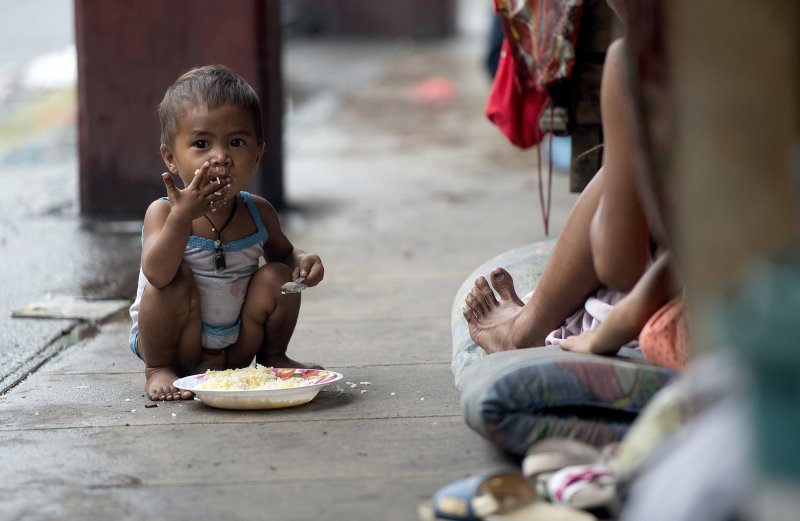
A homeless child in the streets of Manila in 2014.
A homeless child in the streets of Manila in 2014 (Source)
I have no guilty conscience whatsoever.

I don't begrudge Greta Thunberg her first-class train ticket (or so it looks to me). Nor am I offended by her vegan(?) lunch--downright spartan compared to mine in Manila. I'm not bothered by her air travel to the U.N. meeting in New York, even though she probably flew business class (or even first class). That her audience all made similar arrangements to attend her talk is also not an important concern.

What disturbs is not the facts themselves, but rather the hypocrisy of it all. Terry Evans, in a feature article in The Militant, understands that much.
Almost all the proposals bandied about amounted to one thing — working people have to sacrifice to save the world. Give up your car, no more air travel, only plant-based food at McDonald’s, and the like.
[UN General Secretary] Guterres demanded no new coal plants be built worldwide after 2020. Another U.N. official told countries in Africa “not to get into coal.”
Calls to restrict which kinds of energy sources can be built by governments in the semicolonial world, countries whose development was stunted and distorted by colonial exploitation, amount to a demand that the 840 million people who live without electricity continue to go without. Close to 600 million of those live in rural Africa.
Ms. Thunberg, who with a straight face demands of her audience that they impose draconian restrictions on the rest of us--to reduce our carbon footprint by more than 50%--somehow holds herself exempt from those rules. Unlike me--merely on a luxurious, recreational trip to Manila--she is among the Chosen Elect tasked to Save the Planet. Not only is she Chosen, but so is her audience, made up of diplomats and potentates from around the world.

They may think they're Chosen, but to me it looks like Greta Thunberg and her audience don't really believe their own climate bullshit. I think it's hypocrisy all the way down.

Apart from The Militant, my Trotskyist friends agree with Ms. Thunberg. Here are excerpts from a manifesto issued by the Solidarity Ecosocialist Working Group.
While the forests in the Amazon and Congo are in flames, while extreme weather demolishes island countries from the Caribbean to Southeast Asia, while the Great Lakes suffer from both flooding and the spread of algae, politicians and corporations fail to address the climate crisis. So youth around the globe are taking a stand, demanding that we break with the fossil-fuel economy. On September 20 youth are striking for climate justice. We stand with them! ...
We need a “just transition,” one that retools and repurposes manufacturing, replaces the inadequate system of food production and builds communities where people have the right to good, healthy and meaningful work. In short, youth are demanding a future for themselves and for the planet!
The magnitude of the problem is grossly exaggerated; the difficulty of the proposed solution is vastly understated. Though at least Trotskyists are not flying around the world in business class.

But this post isn't about climate change. It's about poverty.

My former comrades--including The Militant--all make the same mistake. And not just them: most Democrats share in the error.

It is this. They believe that if people like me didn't take luxurious vacations, then homeless children could live in a better world. The money I (or Greta Thunberg) spend is in their view "wasted," and instead should be used "to meet human needs."

My business class round trip NYC to Manila cost about $4,000. Economy tickets can be had for around a grand.

Consider this:

  • Without business class service, about half of all flight attendants would be laid off.
  • Economy tickets are partially subsidized by business class passengers, and would be more expensive without them.
  • Skilled chefs prepare meals for business class customers (who are willing to pay for them). Absent the premium fare they'd be unemployed.
Our hotel cost about $200/night, about 25% of which was taxes. We stayed for 14 nights.
  • We paid for maid, laundry, and front-desk services.
  • We got a "free" breakfast (a good one), providing a salary to servers, cooks, and cleaners.
  • The hotel had electricity and potable water--I'm sure we paid a premium for those services, subsidizing Manila residents.
  • The taxes paid for infrastructure throughout the city.
And beyond that:
  • We hired a car and driver nearly every day, paying as much as $200. That pays for the car, the driver, repairs and fuel. In addition to a fuel tax, we paid tolls.
  • We ate in restaurants, paying chefs, waitresses, busboys, food and rent.
  • My wife did some shopping, buying mostly local products.
  • We even patronized a few street vendors.
It's hard to estimate, but I'll hazard that 70% of the $13,000 we spent on the trip was paid out as wages, mostly to Filipinos. The rest went for resources (food, fuel) and profit (maybe 5%). As mentioned, the taxes we paid subsidized the municipal infrastructure, including electricity.

So tell me--would those homeless children be better off if we'd instead stayed home? Of course not! Without tourism the Philippines would be a much poorer place.

And tell me again--would those homeless children be better off if we'd flown coach, stayed in cheap, budget hotels, and lived off street food? Again, no!

There is the old saw:
Give a man a fish, and he eats for a day; teach him how to fish, and he eats for the rest of his life.
We didn't teach anybody fishing, but we did something nearly as good. By our custom we helped sustain a viable economy. I estimate we contributed approximately $6,000 toward labor costs in Manila. The median annual household income in the country is about $5,300--we supported a whole family for a year!

I don't expect an award. I did, after all, have an extremely pleasant vacation in the Philippines. But please don't tell me that I don't care about the children.

Suppose, for example, somebody like President Elizabeth Warren or President Jeff Mackler or President Greta Thunberg comes along and says I don't deserve all my money. It becomes impossible for me to travel to the Philippines--and certainly not in business class. Will that make the homeless children of Manila any richer?

Of course it won't. Making rich people poor does not make poor people rich. And that's what all the pro-poverty politicians--especially including my Trotskyist friends--don't understand.

Down with Poverty!

Further Reading:


Monday, March 11, 2019

The Philippines

I just got back from a two week visit to the Philippines. Most of my time was spent in and near Metro Manila, but we did do some island hopping--to Cebu, Bohol, and Dumaguete.
My first visit to the country was in 1988, and the last time I was there was 1995. So it's been 24 years--and gosh, the country sure has changed! It's much richer than before.

Manila traffic is still awful, but it's not as bad as I recall from my previous trips. They have expanded rail transit significantly. Just as important, they have built out the expressway and toll road system around Manila. The famous boulevard--Epifanio de los Santos Avenue, known universally by its initials, EDSA--has been converted to a full-fledged expressway. That cuts the heart out of the city, but it has hugely improved traffic flow.

EDSA, you may recall, was the site of the mass demonstrations that overthrew the Marcos dictatorship in 1986. The date, February 25th, is celebrated as Revolution Day and is a national holiday. EDSA today could not host such an event--it would be like holding a mass rally on the Dan Ryan Expressway. I'm not real clear where a revolution today might happen. Rizal Park? Triangle Park in Makati? Roxas Blvd? I'd vote for the latter.

Manila used to be very polluted--everybody wore face masks. I'd end each day with my nose, eyes and ears filled with diesel dust. Today this is much improved, largely because the country is gradually banning the diesel-burning, smoke-spewing jeepneys. These iconic vehicles are being replaced by less attractive but much cleaner, gasoline powered minibuses.
Filipino Jeepney (Source)

They've also banned smoking! There is no smoking in any mall, store, or restaurant. Indeed, apparently it's illegal to smoke on the street--I didn't see anybody doing it. I did see the occasional Jeepney driver lighting up.

Apart from the rail system (which I never used) public transit in the country is all privately owned and operated, beginning with the Jeepneys or their replacements. Bus lines are private, as are all the ferry boats. The latter are clean, punctual, safe, and cheap. Domestic air travel is also cheap, the result of competition between Philippine Airlines and Cebu Pacific. The toll roads are privately operated--I'm not sure who owns them or how the right-of-way was procured. They are in good shape, but the tolls are pretty steep. Accordingly there isn't too much traffic, and most users are trucks, buses and other commercial vehicles. By contrast, publicly-owned EDSA (which is not tolled) is a parking lot for much of the day.

Approximately 25% of all Filipinos are part of the global poor. The definition roughly corresponds to the United Nation's--less than $3/day. That means 75% of the country has moved into the global middle class, i.e., possesses some discretionary income.

Grab drivers (the Filipino equivalent of Uber) earn about $15/day (net of expenses). I think store clerks are paid similarly (there are a lot of them!). That's enough money to occasionally eat in a fast food restaurant, buy toys or cosmetics, or once in awhile take a day off and go to the beach. On the other hand, one of my wife's relatives is the director of a large Catholic school (more CEO than principal)--she earns $2,000 per month.

My wife grew up in a rural barangay ("village," or "neighborhood") 100 km south of Manila, known to locals by its initials: GKBB. It consists of a single road, lined on both sides by large, mostly unoccupied houses. The story of who built, owns, and occasionally lives in those houses is the story of the Philippine economy.

The country produces no industrial exports. Agricultural land is in short supply, and used mostly for local consumption. Regards services, since English is widely spoken many work in call centers, assisting American customers. Finally there is tourism--mostly oriented around beaches and diving.

By all rights the Philippines should be a very poor country--rather like Haiti--foreign exchange coming only from low-grade services and tourism. But it's much richer than that. It's because they export people.

One third of the world's seafarers are Filipino (source). Filipinos are favored employees for cruise lines--they're 60% of the crew on Royal Caribbean vessels (source).

While unskilled labor in the Persian Gulf comes mostly from India and Pakistan, the skilled trades and mid-level engineering jobs are held mostly by Filipinos. My wife's cousin spent 20 years in Saudi Arabia, before coming home to live off the proceeds.

Thousands of Filipina women work as domestics in Hong Kong and Singapore. Hong Kong's infamous yayas (nannies) lead very hard lives, as they do also in Singapore. The movie Ilo Ilo movingly relates the story of a yaya in Singapore. Filipinas by the tens of thousands staff brothels throughout East Asia and Australia.

In the United States Filipinos are concentrated in health professions--all the way from orderly to cardiac surgeon. You will also find them in engineering and hospitality jobs. The Filipino population in the US is estimated to be around 3.4 million (source).

The Philippine diaspora is truly global. My wife, children and I spent a year in Uganda--and sure enough we found a thriving community of several hundred Filipinos already there.

All those people send money home--money that's used to build fancy houses in their ancestral home towns such as GKBB, which they'll occupy when they visit or retire. In the meantime they sit mostly empty.

Of course this works--as long as the global economy grows, the Philippine economy grows with it. It's obviously grown like gangbusters since 1995--that's why the country is so much richer today than in 1995.

The precondition for the business model is that the Philippines has enough people to export. And sure enough, it has the highest fertility rate in East Asia. About 37% of the population in the central Visayas (Cebu) is below 10 years old (source). Filipinos are rightly proud of their shopping malls, but the biggest difference between those and malls in the US is this: In the Philippines they have lots of babies, while in the United States they have lots of baby boomers. (It's an added bonus for the tourist since Filipino children are crazy cute!) The Philippines is today a lifeline to places like Japan and South Korea, peoples so obsessed with birth control that they can't even reproduce themselves.

While the Filipino fertility rate is still about 3.0 (source), it is down from 3.5 in 2000 (source). A continuation of that trend spells disaster for the country--you can't export people if you don't have any. Without people, the country becomes as poor as Haiti.

But, being optimistic, let's hope they maintain their birth rates. Then the future belongs to the Filipino. And that's not a bad future. Not bad at all.

This isn't a travel blog. Still, here are a few pics from my trip.
Momo Beach on Panglao Island. Cebu Island is visible in the distance.
Manila Bay and city skyline--from our hotel (TRYP at Mall of Asia).
Cross of the Holy Child--Magellan's Cross in Cebu
Magellan was killed fighting for King Humabon against the Lapu-Lapu on neighboring Mactan Island.
The Chocolate Hills, Bohol

Further Reading:

Sunday, November 4, 2018

The Militant Visits Manila

For some reason my Trotskyist friends love International Book Fairs. The Militant reports on such events from diverse places like Havana, Tehran, Erbil, London, Sweden, and more. Recently they devoted two articles (dated Nov. 12 and Oct. 29) to a fair in Manila.

I don't know who the intended audience is at a book fair (bookstores? consumers? critics?) but Pathfinder Press was there. 
There was hardly an hour when the Pathfinder booth at the Sept. 12-16 Manila International Book Fair wasn’t packed with fairgoers of all ages browsing the shelves with growing enthusiasm for the books they saw. The crowds kept coming even after a powerful storm sideswiped the city Sept. 15.
The two titles championed that week were Cosmetics, Fashions, and the Exploitation of Women (published 1993), and Our History Is Still Being Written: The Story of Three Chinese-Cuban Generals in the Cuban Revolution (First edition published in 2006; recently reissued). The hosts at the booth included Ron Poulson from Australia, Janet Roth from New Zealand, and Mary-Alice Waters from New York. They were assisted by "[t]wo young Filipinos active in social and political struggles...". In addition, comrades Poulson and Waters participated in a panel discussion held at the University of the Philippines.

So I'm not interested in book fairs, which in this Amazon-era are a complete waste of time. And I'm not all that interested in the two books highlighted. I read Cosmetics... many years ago, along with author Evelyn Reed's regrettable magnum opus, Woman's Evolution (1975). I've never read Three Generals, and have no intention of doing so.

The fascinating topic for me is the city of Manila and the people who live there. My wife of 32 years was born in the Philippines and lived in Manila as a teenager and young adult. I spent about four weeks in the city, most recently in 1995. I'm due for another visit (perhaps next Spring), but I don't really like traveling there. As Mary-Alice can likely attest, the traffic is simply terrible--it's impossible to get around. And then I am required to spend most of my time listening to my wife talk Tagalog to her myriad friends and relations. It's dull.

Which doesn't mean I'm ignorant. I read a history of the city by Nick Joaquin, Manila, my Manila. It's a wonderful book, but sadly not readily available in the US. Among many other things, I recently read 1493 by Charles Mann--he devotes a long chapter to Manila. Finally, I love maps, and my wife brought me back an excellent one from a recent trip. So while I may not know Manila, I do know Manila geography.

Filipinos love nicknames, and the ones given to women baffle the Militant's authors. For example, the "coordinator of WomanHealth Philippines, convener of the Dignidad electoral coalition, and a leading member of the Philippines-Cuba Cultural and Friendship Association" goes by "Princess." That would shame an comparably well-placed, upper-middle class feminist in the United States.

That's hardly the worst of it. Common nicknames include "Baby," "Precious," "Queenie," and "Inday."  That latter is the Visayan word for "sexy young woman," or, perhaps, "bimbo." Nobody finds these names insulting--quite the contrary, they are proud of them, especially as they get older. (Men have nicknames, too--a common one, for a grown man, is "Boy.")

Two observations seem relevant. First, the Philippines is a remarkably religious country. Eighty percent are Catholic, with the remainder divided between Protestants and Muslims. Whatever their confession, they take religion extremely seriously--to the point of nailing themselves onto a cross on Good Friday. I've never met a Filipino atheist or agnostic.

Catholics (unlike Protestants or Muslims) venerate the Virgin Mary--she of the Immaculate Conception, assumed into heaven as our Blessed Mother. This whole shtick (which people take very seriously) effectively raises the status of women--especially mothers. While young women have difficult lives (as do young men), older women acquire the status of matriarch and head large extended families. The result is that marriage is especially valuable to Filipinas--one can't become a matriarch without a family. It also goes a long way to explaining the relatively high fertility rate.

Second, like women the world over, Filipinas are very fashion-conscious. Unlike what Cosmetics... claims, this is an intramural status competition among women--men are bit players. So this question from the floor is not surprising:
Fredda Ruth Rosete, a young Filipina, asked: “I want to be fashionable and to look attractive to the opposite sex. I’ve been told I’m contributing to my own oppression. Is that true?”
“The answer is no!” Waters replied. “But we have to be conscious of the pressures on us generated by the capitalist system and not let that determine our lives. ..."
Mary-Alice seems to have retreated from the hard-nosed, merciless feminism I recall from my youth. That unadulterated, radical version common in America will not appeal in the Philippines.

Re discrimination against Chinese, Mary-Alice makes the following ridiculous statement.
Waters said, “Cuba is the only country in the world where there is no discrimination against descendants of overseas Chinese. The only one! Before the Cuban Revolution, Chinese there were discriminated against as they are in all other countries where large numbers of Chinese settled.
How could she possibly know that? By what quantitative measure of discrimination against Chinese does Cuba come out identically zero?

Or put another way: Can Mary-Alice please tell us where the best Dim Sum restaurant in Havana is? I'll hazard there aren't any Dim Sum restaurants in Havana--good food is against the law there. In Manila, conversely, good Chinese food is everywhere. I had by a wide margin the best hot & sour soup ever in my entire life there.

Please don't tell me that Chinese aren't discriminated against in Havana.

Her co-panelist, Teresita Ang See (typical Chinese-Filipina name: Catholic given name, Chinese family name) understands the situation better. A little history is helpful.

The Spanish founded Manila, which prior was a swampy river delta, inhabited by fishermen who lived on the few islands. But Manila Bay is a world class harbor, and the Spanish filled in some of the swamp, founding a city at the mouth of the Pasig River. That original city exists now as Intramuros--still today a religious, cultural, and educational center of the country.

The reason for the Spanish settlement was to facilitate trade with China. In exchange for Mexican gold and silver, China sold silks, porcelain, spices, and other manufactures. Junks arrived from China carrying the goods, while galleons came from Acapulco carrying the gold. The ships traded cargoes in Manila and sailed back to where they came from.

Facilitating this trade were a group of Chinese merchants and bankers. The Spanish didn't like commerce and didn't trust the Chinese, so they were restricted to the Parian (today known as Binondo) on the other side of the Pasig. The Chinese got rich. The Spanish built their empire and aggressively practiced their religion. The local Tagalogs got nothing except Catholicism and jobs as stevedores. Or occasionally they were taken as slaves to help sail the boats in one direction or another.

For many centuries Binondo was the commercial center of the Philippines. It is still the heart of Chinatown (though that has expanded into Quiapo). Since Manila was completely leveled during WWII, postwar the commercial center was rebuilt in Makati, where there was more room. But the people who run it are still the same--Filipino-Chinese--who constitute the country's commercial class to this very day. They dominate business life.

Needless to say, all this breeds envy. Anti-Chinese pogroms are a constant throughout Philippine history--Parian itself was destroyed by rampaging mobs on numerous occasions. My wife recalls from her childhood how the Chinese were forcibly run out of her hometown--their stores and property confiscated, Idi Amin style.

Cubans are surely aware of how that works. They didn't just drive their commercial class out of a single town, but rather out of the entire country. Indeed, it's likely that the best Dim Sum restaurant in Havana is actually located in Miami.

Further Reading: