Showing posts with label Solidarity. Show all posts

Monday, March 3, 2025

Harvey Graff Defends The Ivory Tower

An ivory tower at All Souls College, Oxford
By Andrew Shiva / Wikipedia, CC BY-SA 4.0, https://commons.wikimedia.org/w/index.php?curid=32343526

Solidarity usefully reprints a short article by the well-known retired professor and gadfly, Harvey Graff. Entitled The Myth of the Left-Wing Professors, it's accompanied by a short introduction by David Finkel. Key grafs include these:

Among the most distorted and damaging myths of higher education is the ideologically driven and profoundly anti-intellectual myth of “the predominance and indoctrination of left-wing university professors.”...

By “myth,” I do not mean false or fictitious. Regardless of any question of truth or accuracy, myths aren’t circulated or accepted by some people if they do not accord with certain recognizable elements. Nor does falseness limit the spread, selective influence, and damaging effects of myth. That fundamental point is too often missed by media commentators and even among scholars in history, politics, literature or anthropology.

Today’s political and cultural crisis of misrepresentation of professors’ ideological conduct and misconduct can only be understood in historical context. For the full millennium of their history, universities have been avowedly culturally and politically conservative.

I actually agree with much of this. The first paragraph claims that the "myth" has two parts, namely the "predominance" and "indoctrination" of "left-wing university professors." Predominance is mythic because today's professors aren't "left-wing" at all, but are instead merely centrist "liberals," such as dominated American politics from FDR through the Obama administrations. I don't think this is true--today's professors are--by and large--way more reality-deprived than, say, staunch liberals like John Kenneth Galbraith or Daniel Patrick Moynihan. But ok, if Mr. Graff wants to relabel professors as "liberal," then sure--I'll let him have at it. But just for clarity I'll describe the polarization in this country as being "left" and "right," even if it's not precise terminology.

Mr. Graff denies that professors engage in "indoctrination." I agree with him there. It's not like they don't try--it's rather that they don't succeed. I think the fastest growing political groups on campuses these days include the Young Republicans--a phenomenon almost certainly in response to the very illiberal political correctness and kooky wokeness that now dominates faculty opinion.

Mr. Graff's second paragraph is more true than he probably realizes. People--on both the left and right--don't choose their opinions on the basis of "facts" or dispassionate argument. Instead we engage in status competitions with each other. Our opinions reflect group affiliation and shared values. Mr. Graff is clearly a cheerleader for his left group, as witnessed by the irrational and emotional invective he directs toward his political enemies.

The third paragraph is the truest of all. Professors were not just conservative in the past, but they're ultra-conservative today. I think reactionary is a better description. They steadfastly try to maintain the sanctity of the faculty guild. They're against most technological progress, notably fracking and, more recently, artificial intelligence. Some of them even want to ban airplanes!

Mr. Graff's view hearkens back to a time when university faculty derived their status from medieval guilds. In those days literacy was rare, books were reproduced by copying by hand, and nobody had yet invented the e-reader. The faculty really was a special bastion of literacy and learning. Some of this still obtained back when I was a grad student: the chemistry literature filled an entire library of bound volumes, to which only members of the academy had access.

But today all residue of guild privilege has evaporated. Research results are now distributed on-line, and important results made public long before the referees have put on their eye-glasses. Indeed, the whole referee/gate-keeping/publication treadmill seems hopelessly out of date. Today's coin of the realm are blog posts, social media conversations and YouTube videos. The professors are left in the dust.

It looks to get worse. These days AI can complete almost any homework assignment in the undergraduate curriculum. I have no idea what the future effect of that will be, but enhanced status for the professoriate does not seem a likely outcome.

Today's professors have competition from all sorts of very smart people outside of academe. And if there's one thing that professors can't stand, it's competition. The faculty want to put that competition back in the box, and to reassure academics that they still have access to the special rights and privileges not granted to other citizens under the Constitution. These privileges come under the rubric of academic freedom.

Which may be briefly summarized this way:

  1. Faculty should have a right to tenure.
  2. Faculty should have unlimited power to hire and tenure other faculty.
  3. Faculty should be totally in charge of the curriculum.
  4. Faculty should get unlimited funds from federal and state governments which they can spend any way they want with no accountability whatsoever.
Academic freedom is what defines the ivory tower, which Mr. Graff races to the ramparts to defend.

So I get it. One hires math professors to teach mathematics, and it would probably be wise to leave the curriculum up to them. Regards hiring, obviously math professors know more about who would be a good math professor than, say, somebody in the state legislature. That is the justification for academic freedom, and on some level it makes sense.

But even there it must have limits. If the scholarly interests of a professor (eg, algebraic geometry) are too far removed from what the students are studying (eg, precalculus), and if the professor's tenure is determined by other faculty based on scholarly output more than precalculus pedagogy--then at some point things just go off the rails. One hires the wrong people for the wrong reasons.

There has to be some outside oversight--even math professors need a boss, and academic freedom must have limits. If that's true for mathematicians, it is much more true for disciplines in the humanities and social sciences--disciplines which more strongly affect what taxpayers in their state or country believe.

You can't have a sociologist who--in his professional life--advocates closing all prisons while citizens are suffering under a high crime rate. The sociology professor--when speaking as a professor--has to represent opinions that are at least within shouting distance of what citizens and taxpayers can understand as rational.

As a private citizen, a sociology professor can mouth off whatever crackpot opinions she wants. But in the classroom she has some limits. She has to be sane. I once knew a biology professor who passionately believed in the existence of space aliens. That's fine; it's a free country. But that opinion has no place in a biology classroom, and when he started discussing space aliens in every class, he got fired.

The typical name for the realm of respectable discourse is often called the Overton Window. I think the Overton Window should be as big as possible, but not infinitely big. More important, the Overton Window should be determined by those who are paying the bills. For a state school, that would be the state legislature. For a private school, it would be the Board of Trustees.

Mr. Graff--rather oddly, because he should know better--conflates academic freedom with free speech. He writes:
Ohio’s new state-mandated (anti-) diversity centers on five public university campuses is a major transparent case in point. Based on false claims and anti-intellectual, anti-diversity mandates, they substitute limited views and narrow requirements. State Senator Jerry Cirino’s legislative efforts to reduce public higher to a tragic mockery of freedom of speech and fact-based pursuit of knowledgeable interpretation sputter — rising again with SB1 passing recently.

In other words, the Ohio state legislature has determined that "diversity" lies outside the Overton Window for university faculty in Ohio. That may or may not be the proper limit (I think it's probably too restrictive), but the state legislature has every right to pass that law.

We all have a constitutional right to free speech. But nobody has a constitutional right to be a professor in the state of Ohio. If you are a professor in the state of Ohio, then you need to live within the Overton Window in your professional life. In your personal life (eg, on your private Facebook account) you can say whatever you damn well please.

Free speech for individuals is absolute. Speech by academics acting within their professional capacity has to be within bounds that benefit the community and the institution. Those limits are ultimately set by the people who pay the bills. It can't be otherwise.

Further Reading:


Monday, January 15, 2024

Malik Miah Defends Harvard

Source: https://en.wikipedia.org/wiki/Claudine_Gay

Malik Miah--a longtime and honorable socialist, formerly a comrade of mine in the Socialist Workers Party (SWP), and now a leader in the Solidarity movement--astonishingly rises to the defense of elite education in an article entitled Targeting Diversity, Equity & Inclusion in Higher Education. The piece is a rousing defense of former Harvard president Claudine Gay, and by extension all who supported her: students, faculty and the Harvard Corporation Board.

Harvard (along with a couple dozen other institutions) are tasked with educating elite students. For example, Bill Gates and Mark Zuckerberg both attended Harvard, admitted on the basis of their near perfect SAT scores. Educating elite students is, of course, precisely the opposite of championing equity. Equity and Harvard are like oil and water--and that is what makes Mr. Miah's defense of Harvard so mysterious.

It is a conceit among my Trotskyist friends--perhaps not often openly stated--that anybody could excel at Harvard if only they were given a chance. William F. Buckley famously said “I am obliged to confess I should sooner live in a society governed by the first two thousand names in the Boston telephone directory than in a society governed by the two thousand faculty members of Harvard University.” My former comrades--I think including Malik Miah--will likely agree with that, and insist that there is no intelligence or aptitude difference between Harvard faculty and students, and a random collection of people chosen from the phone book. Further, the latter are more likely to represent the working class.

Of course it's not true, and if Harvard genuinely thought it was, then they would have to go out of business. Nevertheless, in deference to the American public's egalitarian impulse, they pretend it's true, and so they go to great lengths to admit a few lower class students and to hire a Black woman as president.

It's all a virtue-signaling scam. I wish Harvard would stick to educating the elite as measured, eg, by test scores.

Apparently Mr. Miah buys the charade. He truly believes that Claudine Gay represents progress in Diversity, Equity and Inclusion in some meaningful way. And this despite Ms. Gay being woefully unqualified to be a college president at all, especially at Harvard. Let me count the ways.

The main job of a college president--especially at a private school--is to raise money. This can be done by soliciting donations, recruiting tuition-paying students, scamming the federal Student Loan program, recruiting students from petrostates who pay full, unsubsidized rates, etc. A president who can't meet fundraising expectations will not be long employed. Ms. Gay has 1) deeply alienated a large group of donors, who have vowed to never give Harvard another penny as long as she's in office, and 2) presided over a 17% drop in applications for early admission.

Any president of any skin color would be gone if they'd failed so miserably. (At my former campus, when the admissions' office failed to recruit enough students for the Fall semester, the president was unceremoniously fired.)

Then she got caught plagiarizing. Personally, I don't think this is such a big deal, and if one fires all college faculty who ever plagiarized anything, you probably wouldn't have many faculty left. Beyond which, with so much written on the web, it's hard to distinguish between purposeful plagiarism and coincidence.

But Harvard, in particular, makes a big, huge deal about plagiarism, and having its president caught in the act is embarrassing. Though I think this is more an excuse to fire her than an actual cause.

Finally, Ms. Gay is not much of a scholar. She has published only 11 papers and not a single book. No white male would get a job at Harvard even as janitor with such a weak publication record. She is not qualified to serve on the Harvard faculty.

Mr. Miah will claim this is just a plot against Black women, or an exercise in "white supremacy." Of course he's wrong. There are plenty of Black college presidents, and many of them successful on the measures I've just outlined. Let me mention Shirley Ann Jackson, first African-American woman to earn a doctorate from MIT, who served as president of Rensselaer Polytechnic Institute from 1999 to 2022. "Jackson has helped raise over $1 billion in donations for philanthropic causes." Ms. Jackson was frequently criticized, mostly for being the highest paid college president in the country. But nobody ever accused her of being a diversity hire.

Beyond issues posed by President Gay, there are some issues in higher education generally. In Mr. Miah's telling, these are all the result of perfidious attacks by a certain Christopher Rufo. He writes (quoting Mr. Rufo),

The far right is open about its objectives. Christopher F. Rufo, the leader of the racist mob that chased after Gay, said:

We launched the Claudine Gay plagiarism story from the Right,he stated on X — formerly Twitter — on Dec. 19. “The next step is to smuggle it into the media apparatus of the Left, legitimizing the narrative to center-left actors who have the power to topple her. Then squeeze.

This is a replication of his earlier campaigns to turn “critical race theory” (CRT) and “diversity, equity and inclusion” programs (DEI) into dog whistles for the reactionary Republican voting bloc.

Mr. Miah is generous with the insults. In particular, I wonder why everybody who disagrees with him is automatically a "racist?" Surely there are other, more important, issues facing higher ed than "racism," eg, money and mission. I don't know what a "dog whistle" is. Whatever it is, Mr. Miah's ears are much more finely attuned than mine--or any dog's.

Then it's not just Harvard that has a problem with “diversity, equity and inclusion.” The purpose of higher ed is to give its students a leg up on life--to make them better qualified for employment and to earn them more money and a higher status. Thus higher ed is all about maximizing inequity, that is separating their graduates from the hoi polloi. This seems built into the very nature of the enterprise, and not because of anything Mr. Rufo does.

Higher ed is as much or more about status transfer as wealth transfer. Wealth is easy--everybody can get rich at the same time. If Mr. Miah learns how to build a better mousetrap, then not only will he make more money, but I, a consumer, will benefit from having better mousetraps.

Status, on the other hand, is a zero-sum game. My status can't go up without Mr. Miah's status going down, and vice versa. It's ultimately a pecking order. When universities try to transfer status from one group to another, they're definitely gonna get pushback from those whose status is going down. For whatever reason--Mr. Miah probably knows why better than I do--higher ed today is all-in on raising the status of Black and gay people, and then to a much lesser extent, women. People who are not included (blue-collar folks, Asians, Jews) needless to say feel dissed. It's finally reached a boiling point; Blacks and gays have way higher status in higher ed than any other group.

This isn't the fault of Christopher Rufo.

So I don't know why Mr. Miah champions higher ed. It is probably the most reactionary institution in America today. Diversity, equity and inclusion are precisely not on higher education's agenda--and they never can be. 

Further Reading:

Saturday, July 29, 2023

Unions and Work From Home

Newly elected CWA President Claude Cummings, the union’s first African-American president.
(Picture & caption source)

I owe my friends at Solidarity some love--I've been ignoring them too long. And they deserve it by reposting a piece by Steve Early entitled Bosses, Union Officials, Rank-&-Filers Debate Work from Home. Mr. Early is a longtime activist in the Communication Workers of America (CWA) union, specifically its Newsguild affiliate which organizes newspaper employees. It's obvious that Mr. Early is a reporter: he writes well, and he definitely knows his facts! Mr. Early reports on a topic nobody else on my beat has mentioned: Work From Home (WFH).

According to demographer Wendell Cox, within all US metro areas with at least one million population, 21.9% of employees worked from home in 2021, while only 3.8% rode mass transit. At very least, the era of so-called "mass transit" appears to be over.

A recent WSJ article, dated July 11th, leads with this:

Office attendance is slumping again and bosses have a warning: We are a worse company when you stay home. 

In buildings across 10 major U.S. cities, office occupancy has fallen back below 50% for the past three weeks, according to Kastle Systems, which tracks security swipes into offices. The drop comes despite new return-to-office mandates that affect more than 600,000 workers and counting.

The bosses cite multiple reasons for wanting their employees back in the office. First, they suspect they're slacking off. Then there is less room for creative conversations and serendipitous discoveries. And finally it's hard to on-board new employees or discover the likeliest candidates for promotion if you never meet them in person.

Also cited is the damage it does to downtowns:

“Everything from daycare to public transportation, toll roads, fuel and fuel taxes, auto purchases and maintenance, dry cleaners, nail spas, restaurants, clothiers, hair stylists, dog walkers, nannies and office leases suffer when people work from home,” said Dean Porter of Houston. “Mayors and governors and too many managers want people back commuting.”

Workers who do a good portion of their job remotely contend they aren’t obligated to prop up the office, or an office-centric economy.

“It is not my responsibility to save downtown by going back to the office,” said Merrik Wright of Miami. “The average worker should not be in charge of something that just costs us time and money.” 

Conversely, employees really like working from home, not only because it saves commuting time and expense. It permits a more flexible schedule, within which they can balance childcare and other responsibilities. They hate the "open-office" layout, which inhibits work. And they claim--with some data to back them up--that they're at least as productive at home as in the office.

On the downside, employees miss social contact with workmates, and they're also required to absorb the expense of setting up a home office.

If the bosses and their employees are struggling with WFH, then so too is the CWA. In a recent election for union president, the two candidates in the run-off disagreed on precisely that issue. The winner, newly elected president Claude Cummings, is a fan, arguing 

... that CWA would not be well-positioned to help more white-collar workers win bargaining rights and contract language on WFH if top union officials opposed remote work options."

Mr. Cummings had support.

According to Local 7250 President Kieran Knutson, his fellow customer service reps in Minneapolis had discovered that remote work “was safer, saved them money on commuting and childcare, gave them more time for rest and with their families and more control of their work space.”

That’s why Knutson and leaders of other AT&T locals launched a grassroots campaign aimed at keeping Work from Home (WFH) as an option at AT&T, the most heavily unionized telecom company.

The response from the union leadership was lukewarm, at best. Indeed, Mr. Cummings' opponent was CWA Vice-President Ed Mooney. His stated reason for opposing WFH doesn't make too much sense.

... WFH has put “the companies in the driver’s seat because they are aware our members like it so much.”

But Mr. Early delves deeper, and Mr. Mooney's objection is more reasonable.

Mooney defended his role in negotiations with Verizon over WFH last year. During those talks, other CWA bargaining committee members like Local 1400 President Don Trementozzi had to overcome Mooney’s initial opposition—voiced during union caucuses — to extending remote work opportunities for Verizon customer service reps.

Then and now, Mooney’s questioning of WFH resonated not only with east coast Verizon locals, dominated by technicians, but also some rank-and-file radicals who belong to those locals. Echoing Mooney’s concerns, one long-time activist and fellow Labor Notes supporter told me that WFH “takes away our bargaining power, leaves people more atomized, and gives management too much control.”

And that's just it. The union depends on the office just as much as the bosses do. The bosses want to instill a company culture; the union wants to foster solidarity. Both of those are threatened by WFH, and hence the resistance from union officialdom despite the rank and file pressure.

Put in my own words: How do you organize a strike in a WFH shop? Holding a picket line in front of a largely abandoned office building doesn't look effective. Do you picket everybody's front porch? And how do you rat out the people who cross the picket line simply by logging in from their home office?

Mr. Early himself admits to being an early WFH skeptic.

Three decades ago, I was similarly ambivalent. As a national union rep between 1980 and 2007, I had much first-hand familiarity with the workplace culture of telephone company service reps and the different (and more blue-collar) world of inside and outside “plant technicians.” ... Most cable guys loved being able to take their trucks home at night and go directly to customers’ homes the next morning. Union-minded telephone techs wanted their co-workers to report to a central location every day, so they would have more regular contact with shop stewards.

After I helped a group of 1,500 customer service reps in New England get a first contract in the mid-1990s, it wasn’t long before the company now known as Verizon wanted to do a “trial” of work from home. One reason for our resistance to that proposal was the fear that collective action in newly organized call centers would be more difficult, if everyone was isolated at home and not working under the same roof.

But he's since come around--for which he credits new technology.

The availability of now well-tested new tools for communication, coordination, and membership participation — that were not available back then — has convinced me that greater union flexibility on this issue is absolutely essential. ...

According to [Don] Trementozzi, rank-and-file participation in his local actually increased during the pandemic. Because bargaining sessions, committee meetings and general membership gatherings were conducted via Zoom, they attracted people who would not have attended in person, after working all day or all week in their previous work locations.

The union argument against WFH is exactly the same as the bosses. And like the bosses' employees, Mr. Early is arguing that company culture/union solidarity is just as well transmitted during Zoom meetings. Count me just a little bit skeptical. But both the bosses and the union have to deal with huge employee resistance to being marched back into the office--and Mr. Early has given up the fight and chosen to side with the employees. I don't blame him, but I'm not sure how well that will serve the union.

The fact is that the interests of the union (in this case building solidarity) and the interests of the workers (who overwhelmingly like WFH) often diverge. There are many other examples, e.g., gig workers generally prefer their gig status to being full-time, unionized employees. I commented on how hotel workers have interests that don't correspond to their union here.

All that said, Steve Early is a good writer and an honest reporter who really knows something about his topic. He takes on a serious issue with important economic ramifications. His piece is well worth reading.

Further Reading:


Tuesday, April 12, 2022

What's Happened Since I've Been Gone

I guess I need to explain my absence. My cancer came back and I've spent the last four months undergoing chemotherapy. The first few weeks were truly debilitating and I couldn't have blogged even if I wanted to. But after that--I just didn't want to. I was getting bored with my own posts. So with chemo as the excuse I took a break from blogging.

The good news is that the chemo worked--I am now in complete remission. In celebration my wife and I will be taking a vacation, including 12 days on a Caribbean cruise. I've never done that before--it's definitely an old man's holiday. So regular blogging won't resume until early May when we get home, but I'm chomping at the bit to get started again.

I've been gratified to see that even in the absence of new material, this blog has attracted 20 - 30 legit hits per day--pretty good for an amateur covering a very niche topic.

So if I've been sick, then my friends over at Socialist Action (SA) have been going stir-crazy. They managed to post exactly one (1) article during the month of March. I sure am glad I haven't paid for a subscription to the print newspaper--it must be mostly blank pages by now.

The reason for the silence is obvious. SA is unapologetically pro-Putin. To summarize their position in my own words, while they acknowledge that Russia is a capitalist/imperialist state, the country is nevertheless an objective force for progress because it necessarily must oppose the much stronger American imperialism. The real cause of the Ukraine war, in this view, is not anything that Putin or the Ukrainian people have done, but instead it's entirely the fault of "US imperialism"--that largely mythical boogeyman upon which all evil can be blamed.

On April 11th SA's chief honcho and failed presidential candidate Jeff Mackler finally posted a long article explaining at great length the position I've just described. The supposed sins of the USA are catalogued in detail. For example:

  • Ukraine is dominated by US-funded fascists, such as the Azov Battalion.
  • Fascist snipers shot 100 innocent civilian on Maidan Square in 2014.
  • Fascists overthrew the duly elected president, Viktor Yanukovych--forcing him to flee to Russia.
  • The US installed (somehow, mysteriously) the fascist prime minister Arseniy Yatsenyuk. 
And so on. He cites no references for any of this--neither as links nor in a bibliography. His only source for the fascist snipers are unspecified remarks by Victoria Nuland--he provides neither the date nor venue for her speech. It's impossible to track this down. His only other source is a booklet authored by--Jeff Mackler--of all people.

In other words, Mr. Mackler just makes stuff up. You can't believe a word he says.

SA's call to action is to demonstrate against the US government for forcing Putin to invade Ukraine--as summarized by their key demand: US Out Now! Hands off Ukraine! Needless to say this is crazy-talk, and will attract no support from anybody on the American political spectrum.

One last thing: I can't let Mr. Mackler's antisemitism go unchecked. The fact that current president Volodymyr Zelenskyy is Jewish apparently sticks in his craw. The only mention of the man's name is this: "We note with contempt Ukrainian President Volodymyr Zelensky’s recently-proclaimed affinity for Zionist Israel’s model of a militarized state aimed at the subjugation of oppressed people."

If Mr. Mackler is nutty, then our comrades in Solidarity are perfectly sane. A long editorial, dated March 2nd, is posted by the "National Committee." The piece is well worth reading, and I recommend you do so. 

I think the article is mostly correct. They unambiguously condemn Russia for the invasion and are not making excuses for Putin. But at the same time they write:
NATO’s expansion into post-Soviet Eastern Europe, up to Russia’s borders, was all the more dangerous because it was not only a power grab, but also ideologically driven by the U.S. establishment’s assumption, after the Soviet Union’s collapse and the crushing U.S. victory over Iraq in the 1990-91 Kuwait war, that its rule was uncontested. It violated assurances that U.S. diplomats at the highest level had made to Soviet leader Gorbachev, and was already called by George Kennan in the 1990s a “tragic mistake” that Russia ultimately would never accept.
This is absolutely correct. NATO should never have expanded east of the Oder/Neisse line (today Germany's eastern border). The extension into eastern Europe has to be seen by Russia as a threat. The Biden administration's biggest mistake was to insist that Ukraine have a hypothetical right to join NATO. Indeed, I think that was the proximate cause of the war to begin with.

Unlike Solidarity, I do not believe NATO should be abolished--I do think it needs to retreat from Russia's borders. The editorial also states that "...NATO and particularly U.S. imperialism are at least equally aggressive and as dangerous as Russian annexationism." I do not agree with the adjective equally here--Putin is by far most at fault.

Contra Jeff Mackler, they write:

It is painful to see how much of the U.S. peace movement swallowed the simplistic story that the events of 2014 in Ukraine, when a spectacularly corrupt pro-Russian government was deposed under pressure of a mass movement (over whether to join a European trade bloc or a Russian-led Eurasian one), were a “fascist coup” and a “genocide” of Russian-speaking regions.

In these claims, some kernels of reality are wrapped inside layers of twisted falsehoods that could (and do) come straight from the Kremlin – as if, for example, violent ultra-nationalist forces, which do exist in Ukraine, are more powerful there than they are in Russia!

I couldn't have put it better myself!

On a completely different topic, news comes that Socialist Resurgence (SR) will unite with a grouplet called Workers' Voice (WV), with the new group adopting that latter name. They write:

We are in agreement about the necessity for principled regroupment of revolutionary groups. The two groups carried out common discussions and practical work for two years and have come to a shared perspective on the fundamental situation facing the working class and oppressed today. On this basis, a congress was held on March 19-20, 2022, in which WV and SR voted to merge as Workers’ Voice. Our congress included observers from the International Workers League, Revolutionary Socialist Organizing Project, Tempest Collective, Corriente Obrera, and affiliates of the Revolutionary Socialist Network. 

As a fused organization, Workers’ Voice brings together two historic traditions of world Trotskyism into a common revolutionary party.

The "two historic divisions" represent two versions of the Fourth International (FI): that of the United Secretariat, which purports to be the original FI, and the International Workers' League-Fourth International  (IWL-FI), which claims a mission to "reconstruct" the original FI. (A more useless mission is hard to imagine.)

The Workers' League existed back in my day (1970s), then led by a fellow named Tim Wohlforth. In a play on his name, our derogatory name for them was the Woolies. I did not know them well--there weren't many Woolies in the cities where I lived. I say more about this in one of my earliest posts, here.

The IWL-FI writes a history of their movement--it reads like an endlessly tedious soap opera. I couldn't make much sense of it. Mr. Wohlforth is not mentioned at all--I think he was forced out in disgrace. More useful than the text itself are the footnotes. They're explanatory and can be read independently--and serve as a useful summary.

I've since googled around and discovered that Mr. Wohlforth died in 2019 at age 86. He spent the last decade of his life in Ashland, OR, where he was a member of the Society of Friends Meeting--a tradition he picked up from his childhood. He wrote mystery novels (with some success) and mentored others in that craft. Here is his obituary, and here is a reminiscence. Neither mentions his Workers' League years, but his Wikipedia page does. He is survived by a wife, a son, two grandchildren, and many friends. In other words, he was a successful and accomplished man.

I do wish the new Workers' Voice success. Certainly not in making a world revolution--heaven forbid--but in producing an interesting and useful web page from which I may learn something, and from which I can draw inspiration.

Further Reading:


Friday, October 30, 2020

Who Should Trotskyists Vote For in 2020?

In a post by the Solidarity Green Party Working Group entitled Solidarity and the 2020 presidential election, they write

As reported in Solidarity’s Election Poll, a Solidarity internal poll found that 47% of respondents supported voting for Howie Hawkins and Angela Walker running as Greens in the 2020 presidential election, 27% supported voting for Hawkins and Walker where the Democrats are assured of winning and for Joe Biden in “swing states,” 21% supported voting for Biden everywhere (motivated as “Dump Trump, fight Biden”), and 5% provided comments but selected none of the three options. ...

How did Solidarity, a revolutionary socialist organization founded on the principle of working-class political independence, get to this point? And not just Solidarity. How did the revolutionary socialist movement get to this point? We ask the question not to recriminate but to discern a way forward.

For any Trotskyist--current or former--the problem is self-evident. As a core principle Trotskyists refuse to cross the class line and will not support a "bourgeois" party. The Democrats are the very essence of a bourgeois party, and accordingly no self-respecting Trotskyist of whatever denomination will support them. My former comrades adamantly reject lesser-evilism, i.e., voting for a Democrat just because he seems more progressive than the Republican. The dogma is that Democrats and Republicans are essentially the same--both representing the bourgeoisie.

The principle distinguishes Trotskyism from the Stalinist tradition which has long supported progressive Democrats, this year championing Bernie Sanders, and now Joe Biden. The Bob Avakian Fan Club, self-avowed Stalinists, write "It is crucial that there be a massive vote against Trump—which means voting for Biden."

Aversion to Democrats is often taken to extreme lengths. This year both the Socialist Workers Party (SWP) and Socialist Action (SA) are running their own candidates. In the SWP's case this extends a long tradition, and at least the completely useless effort is competently executed. SA, meanwhile, has put forth the laughably ridiculous Jeff Mackler as their candidate--they're not serious.

My friends at Solidarity rightly regard these old-fashioned Trotskyist campaigns as farcical, and accordingly they're looking beyond sectarian Trotskyism for solutions. Their current best choice looks to be Green Party candidates Howie Hawkins and Angela Walker. There is precedent: in the 2016 cycle they supported Jill Stein and Ajamu Baraka. Prior to that SWP alum Peter Camejo was the Green Party candidate for Governor of California for three elections, beginning in 2002.

The SWP and SA accuse the Green Party of being middle class, which somehow puts them beyond the pale. The SWP is at least consistent, regarding the entire environmentalist movement as middle class, and therefore not worthy of support. SA supports radical environmentalism, but without supporting the Green Party.

The original leaders of Solidarity are all former members of the SWP, and for them the class line is a solid barrier--thou shalt not cross it! Which is why they're so astonished and disappointed that so many of their new colleagues (never part of the SWP) even countenance voting for Democrats.

The opposite, non-Trotskyist position is held by Bob Avakian, who writes (italics in original)

To approach this election from the standpoint of which candidate is “better” means failing to understand the truly profound stakes and potential consequences of what is involved. The fact is that there can be one—and only one—“good” that can come out of this election: delivering a decisive defeat to Trump and the whole fascist regime. Doing this would create far better conditions for continuing to wage the struggle against everything represented by the Trump/Pence regime and all the oppression and injustices of this system, and would be a great gift to the people of the world.

His claim is that Trump is qualitatively different from Biden because he's a fascist. Therefore, however bad Biden may be, he must be supported.

In contrast, the old majority within Solidarity argue this way:

Left advocates of voting for Biden generally give Trump as the reason. Trump is indeed a menace. His views may be no worse than those of Barry Goldwater, Richard Nixon, Ronald Reagan or George W. Bush. But he is self-indulgent, chaotic and demagogic far beyond what they allowed themselves. His appeals to white chauvinism are effective with segments of the population, especially older white men. They bamboozle some white workers, who have real grievances but misdirect their anger.

If the U.S. were on the brink of fascism or military dictatorship and a vote for Biden were the last line of defense, perhaps advocating it could be justified. Although it wouldn’t achieve much. It would be like throwing a handkerchief at a charging bear. But the U.S. isn’t on the brink of fascism or military dictatorship. We’re at a highly polarized moment in the alternating administrations of the two-party system.

An article by John B. Cannon makes the case that one should strategically vote for Biden in states where the election is close, while casting a protest vote elsewhere. He writes

On the flip side, of course, Trump is a relatively weak authoritarian. It seems unlikely that he could consolidate a fascistic or authoritarian regime without vestiges of democratic checks, since neither the military nor most of the bourgeoisie support him. ... However, under Trump’s leadership, part of the Republican Party is blurring the line between fascism and right-wing nationalist, authoritarian aspirations, and Republican elected leaders are increasingly unable to operate independently of Trump’s personalistic command. In sum, the politics of fascism are very much at hand, even if the immediate possibility of a fascist consolidation ... is not.

He asks, "What’s a brink, and how do you know you are on it?" Mr. Cannon suggests we're not yet on the brink of fascism, but nevertheless this is a "crisis," perhaps like Germany in 1929 (not 1933). While Trump himself may not lead the way, a future, more competent fascist could really lead us over the brink. Therefore now is the time to stand up against fascism and vote for Biden where it actually makes some electoral difference, i.e., in swing states. Thus, in extremis, lesser-evilism is justified.

A full-fledged turn into the Democratic Party is advocated by Bill Resnick, a personality from Portland, OR. In an article weirdly entitled Dump Trump, Fight and Force Biden: An Electoral Strategy for the Left, he wants to have his cake and eat it too. That is, to vote for Biden while opposing him every step of the way.

He writes,

But just to be clear: everything said about Biden by those who argue against voting for him is true. These truths however, in this moment, don’t carry the day, if you believe, as I do, that Trump has to be stopped in his tracks, repudiated, to decisively interrupt the downward spiral toward a white supremacist autocracy. And a strategic vote for Biden makes sense since his administration will be forced to bargain with “progressive” Democrats in the Congress, and it should be possible to win significant programs, call them non-reformist or revolutionary reforms.

He explains what those reforms are:

We don’t have to wait until after the election to fight for a package of “non-reformist” reforms. By non-reformist reforms I mean programs and policies that:

  • Demonstrate the virtues of radically democratic organizations and social relations which prove that “Every Cook Can Govern” – for example, worker-owned and controlled co-ops, democratically-run teams to treat chronic diseases, participatory budgeting in local government.
  • Honor and reward the skills and contributions of those in non-elite, professional, college diploma- requiring work.
  • Significantly shift political power downward and outward and Increase social organization and power at the base of our society.
  • Provide a solid social safety net that increases the confidence and fighting power of the working class.
  • Challenge all hierarchy including based on race, gender, class, sexual orientation, ability, and spiritual practice.

This, to my mind, is straight-out utopianism, and is not possible even under perfect communism, much less from Sleepy Joe Biden. These hippie-like reforms are a far cry from a Trotskyist transitional program. In my day we would have called it a popular front, i.e., forming a coalition with the bourgeoisie. It seems the old guard in Solidarity agrees with that assessment.

Trotskyism has always struggled between sectarian purity, on the one hand, and big-tent alliances on the other. The solution (insofar as one exists) is a united front consisting of only working class organizations. The antiwar movement as represented by the Student Mobilization Committee was the obvious (and perhaps only) successful example. Though it's not clear how that success has furthered the American Revolution.

Popular fronts work better. Martin Luther King's demands--all won through Republican and a few Democrat politicians--have resulted in enduring gains for civil rights in America. American democracy is strong enough, and capitalism successful enough, that wealth and privileges can be extended across society.

I disagree with my Trotskyist friends: I do not think Trump is a fascist--quite the contrary. Instead of growing government, he is trying to shrink it. Unlike BLM and Antifa, he does not have gangs of thugs on the streets. He is no threat to our democracy, having never once disobeyed a court order. He's neither racist nor white supremacist--he simply rejects ridiculous political correctness.

So this blog enthusiastically endorses Donald J. Trump for president--and not as a lesser evil, either.

Further Reading:

Sunday, May 24, 2020

Malik Miah on the Virus

Malik Miah knows more about race and racism than I do.

He--a former comrade of mine in the Socialist Workers Party--is African-American and has spent his career thinking, reading and writing about race. I, meanwhile, am a white, upper-middle-class, retired academic who thinks about race occasionally, in between the 53 other political topics that sometimes get my attention.

I have nothing to teach Mr. Miah about race--he'd be insulted if I even tried. My opinions are mostly Republican boilerplate. Mr. Miah has surely heard all of that before.

Still--for the benefit of other readers--let me very briefly state my position. Human beings are loyal first to their own kin, and second to others who look and talk like themselves. Therefore racism is a part of human nature, and there is no human society where it doesn't exist. It isn't caused by capitalism, imperialism, socialism, or any other -ism. It just is. It's not a problem for which there is any solution, merely mitigation--such as with affirmative action programs.

That's enough about me. Let's talk about Malik Miah, and specifically his article in Against the Current entitled Virus is Color Blind, Not Humans. The post concerns the large racial discrepancy in Covid victims. Mr. Miah's data:

Statistics (from a selection of states) show this life gap. 
As of this writing (April 12): 
Illinois: Blacks are 15% of the state’s population, whites 77%. Deaths: 42% Black, 36% white. 
Michigan: Blacks are 14% of state’s population and 40% of deaths (heavily concentrated in the metro area of Detroit. The three counties of metro Detroit make up 83% of the state’s deaths).
Mississippi: Blacks are 38% of state’s population, 72% of deaths. 
Louisiana: Blacks are 33% of the population, 70.5% of deaths.
South Caro­lina: Blacks are 27% of the population, 46% of the deaths.
New York City (the epicenter of the virus): Blacks and Hispanics die at twice the rate of whites, who are 46% of the population. The racially diverse Elmhurst section of Queens is being devastated. 
Official figures are underestimated, as New York City has not counted deaths of many people who died at home and were never taken to hospitals. There were not enough tests to check.
A couple of quibbles: Mr. Miah reports death rates, which are likely more accurately reported than other data. But we don't know from this whether Blacks are more likely to get Covid, or simply more likely to die from it. That will make a big difference in any conclusions. Second, I tend to think deaths attributed to Covid are overstated. Mr. Miah's point is correct, but on the other hand anybody who tests positive for the virus is assumed to have died from it, when in many cases (esp. in nursing homes) they died from something else.

So to complement Mr. Miah's death stats, I looked for data on Covid infections by race. The CDC website reports (as of May 24, 2020) that 26.6% of all cases were among Black people, or roughly double their percent in population (13%). That this qualitatively corresponds to Mr. Miah's data is reassuring.

The conclusion then is that Blacks are twice as likely to contact Covid than whites. Mr. Miah attributes that to racism.

He might be partly right, but his reasoning is mistaken. Certainly his opening paragraph is wrong.
The coronavirus is color blind. It strikes whites, Blacks, Latinos, indigenous people, Asians, rich and poor. So why the higher number of cases and deaths for African Americans?
Susceptibility to any disease is significantly heritable, which means it varies by ethnicity. Dramatic examples include Tay-Sachs disease, which afflicts almost exclusively Ashkenazi Jews. West Africans suffer disproportionately from sickle cell anemia--a side effect from their relative resistance to malaria. Charles Mann points out that Black slaves in colonial Virginia had longer life expectancies than their white masters precisely because of that. I just survived a bout of bladder cancer, during which I learned that white men are twice as likely to have the disease than Black men--undoubtedly a genetic effect.

All diseases depend to one degree or another on the genetics of the host. That Covid is twice as prevalent among Blacks than whites strongly suggests genetics as at least a partial explanation. There will likely someday be a polygenic score that predicts susceptibility to this virus.

But genetic susceptibility cannot be the whole story. In Mr. Miah's telling, racism is the cause of Black poverty, and poverty leads to virus infections. That second premise is undoubtedly correct--poor people are more likely to get sick regardless of susceptibility. As a good Republican, I tend to attribute Black poverty more to the social dysfunction described by Daniel Patrick Moynihan in 1964. To which Mr. Miah will likely respond that that dysfunction is itself a product of racism.

To which I have no very good answer, except to note that racism is a very amorphous, ill-defined concept. As said, I freely acknowledge that it exists, and further I'd support some government policies to mitigate its effects (such as a narrowly-tailored affirmative action program). But if Mr. Miah wants to blame the Covid discrepancy on racism, he's gonna have to define racism much more precisely than he has, and then connect many more dots to show how it results in the Covid statistics. I don't think he can do that.

Looking toward the future, this is how Mr. Miah describes the path forward.
The United States is the only developed country in the world where there is no universal health care. The racial gap, however, has prevented united action — even though most people now support a single payer type system. Blacks, Latinos and Native Americans have never received fair and equal treatment. Many African Americans don’t have a primary care physician.
The ideology of white supremacy is so engrained that solidarity between whites and others has been difficult to forge. Racial inequality is exacerbated under a system that puts business and profits first. Yet the need for health solidarity is changing that.
I doubt Mr. Miah and I will find too much common ground here. I think a single-payer system is a lousy idea that will never work. I don't think racial inequality is exacerbated by capitalism--quite the opposite.

Still, there is a problem when many African Americans don't have a primary care physician. And while I'm skeptical we'll ever make much progress, I surely support the notion of health solidarity. I do think that people like Mr. Miah and people like me can reach common ground on at least some issues. And we should try to do that.

To that end, we need to tone down the partisan bickering. Solving the primary care physician problem does not mean we have to solve all problems of everything first. On my side of the aisle we need to avoid epithets like "race-baiter" or "race-hustler." Those are not helpful. And Mr. Miah really needs to stop using language like "white supremacy."

Advice to everybody: if you want to win friends and influence people, throwing around casual insults is not helpful.

Update: I erred in addressing Malik Miah as "Mr. Malik." I have changed those references to the correct "Mr. Miah."

Further Reading:

Monday, September 30, 2019

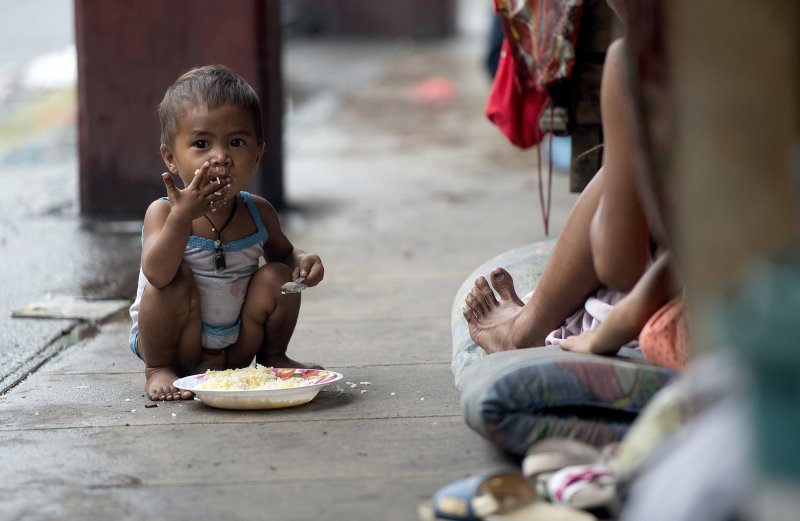
The Pro-Poverty Crowd

"You have stolen my dreams and my childhood with your empty words."
Picture credit; Caption credit
I should talk.

Last February my wife and I visited the Philippines. We flew business class on Japan Airlines and stayed in 4-star hotels. We hired cars to travel around Manila, foregoing public transportation. We dined in nice restaurants, some expensive even by New York standards. A low-cost, eco-friendly, carbon-neutral vacation this was not.

Surely some wiseguy could have published a photo of me sleeping on my lie-flat, business-class seat, paired with street urchins sleeping on sidewalk mats along Mabini street in Manila. The injustice of it all! How could I?
A homeless child in the streets of Manila in 2014.
A homeless child in the streets of Manila in 2014 (Source)
I have no guilty conscience whatsoever.

I don't begrudge Greta Thunberg her first-class train ticket (or so it looks to me). Nor am I offended by her vegan(?) lunch--downright spartan compared to mine in Manila. I'm not bothered by her air travel to the U.N. meeting in New York, even though she probably flew business class (or even first class). That her audience all made similar arrangements to attend her talk is also not an important concern.

What disturbs is not the facts themselves, but rather the hypocrisy of it all. Terry Evans, in a feature article in The Militant, understands that much.
Almost all the proposals bandied about amounted to one thing — working people have to sacrifice to save the world. Give up your car, no more air travel, only plant-based food at McDonald’s, and the like.
[UN General Secretary] Guterres demanded no new coal plants be built worldwide after 2020. Another U.N. official told countries in Africa “not to get into coal.”
Calls to restrict which kinds of energy sources can be built by governments in the semicolonial world, countries whose development was stunted and distorted by colonial exploitation, amount to a demand that the 840 million people who live without electricity continue to go without. Close to 600 million of those live in rural Africa.
Ms. Thunberg, who with a straight face demands of her audience that they impose draconian restrictions on the rest of us--to reduce our carbon footprint by more than 50%--somehow holds herself exempt from those rules. Unlike me--merely on a luxurious, recreational trip to Manila--she is among the Chosen Elect tasked to Save the Planet. Not only is she Chosen, but so is her audience, made up of diplomats and potentates from around the world.

They may think they're Chosen, but to me it looks like Greta Thunberg and her audience don't really believe their own climate bullshit. I think it's hypocrisy all the way down.

Apart from The Militant, my Trotskyist friends agree with Ms. Thunberg. Here are excerpts from a manifesto issued by the Solidarity Ecosocialist Working Group.
While the forests in the Amazon and Congo are in flames, while extreme weather demolishes island countries from the Caribbean to Southeast Asia, while the Great Lakes suffer from both flooding and the spread of algae, politicians and corporations fail to address the climate crisis. So youth around the globe are taking a stand, demanding that we break with the fossil-fuel economy. On September 20 youth are striking for climate justice. We stand with them! ...
We need a “just transition,” one that retools and repurposes manufacturing, replaces the inadequate system of food production and builds communities where people have the right to good, healthy and meaningful work. In short, youth are demanding a future for themselves and for the planet!
The magnitude of the problem is grossly exaggerated; the difficulty of the proposed solution is vastly understated. Though at least Trotskyists are not flying around the world in business class.

But this post isn't about climate change. It's about poverty.

My former comrades--including The Militant--all make the same mistake. And not just them: most Democrats share in the error.

It is this. They believe that if people like me didn't take luxurious vacations, then homeless children could live in a better world. The money I (or Greta Thunberg) spend is in their view "wasted," and instead should be used "to meet human needs."

My business class round trip NYC to Manila cost about $4,000. Economy tickets can be had for around a grand.

Consider this:

  • Without business class service, about half of all flight attendants would be laid off.
  • Economy tickets are partially subsidized by business class passengers, and would be more expensive without them.
  • Skilled chefs prepare meals for business class customers (who are willing to pay for them). Absent the premium fare they'd be unemployed.
Our hotel cost about $200/night, about 25% of which was taxes. We stayed for 14 nights.
  • We paid for maid, laundry, and front-desk services.
  • We got a "free" breakfast (a good one), providing a salary to servers, cooks, and cleaners.
  • The hotel had electricity and potable water--I'm sure we paid a premium for those services, subsidizing Manila residents.
  • The taxes paid for infrastructure throughout the city.
And beyond that:
  • We hired a car and driver nearly every day, paying as much as $200. That pays for the car, the driver, repairs and fuel. In addition to a fuel tax, we paid tolls.
  • We ate in restaurants, paying chefs, waitresses, busboys, food and rent.
  • My wife did some shopping, buying mostly local products.
  • We even patronized a few street vendors.
It's hard to estimate, but I'll hazard that 70% of the $13,000 we spent on the trip was paid out as wages, mostly to Filipinos. The rest went for resources (food, fuel) and profit (maybe 5%). As mentioned, the taxes we paid subsidized the municipal infrastructure, including electricity.

So tell me--would those homeless children be better off if we'd instead stayed home? Of course not! Without tourism the Philippines would be a much poorer place.

And tell me again--would those homeless children be better off if we'd flown coach, stayed in cheap, budget hotels, and lived off street food? Again, no!

There is the old saw:
Give a man a fish, and he eats for a day; teach him how to fish, and he eats for the rest of his life.
We didn't teach anybody fishing, but we did something nearly as good. By our custom we helped sustain a viable economy. I estimate we contributed approximately $6,000 toward labor costs in Manila. The median annual household income in the country is about $5,300--we supported a whole family for a year!

I don't expect an award. I did, after all, have an extremely pleasant vacation in the Philippines. But please don't tell me that I don't care about the children.

Suppose, for example, somebody like President Elizabeth Warren or President Jeff Mackler or President Greta Thunberg comes along and says I don't deserve all my money. It becomes impossible for me to travel to the Philippines--and certainly not in business class. Will that make the homeless children of Manila any richer?

Of course it won't. Making rich people poor does not make poor people rich. And that's what all the pro-poverty politicians--especially including my Trotskyist friends--don't understand.

Down with Poverty!

Further Reading:


Friday, September 13, 2019

Kim Moody on "Persistent Inequalities"

Why aren't wages equal across the economy? Why, for example, does a warehouse worker receive only half the pay of an auto assembly worker? Why are women and minorities paid less than white men?

The book is by Howard Botwinick and is entitled Persistent Inequalities: Wage Disparity Under Capitalist Competition. I have not read that book (though I probably should and maybe I will). Instead I respond to a lengthy review by Kim Moody, published in Against the Current. The principle inquiry of the book is to explain the persistent inequality in the wages of women and minorities when compared to white males.

Mr. Moody is a very capable economist who regards Mr. Botwinick's book (first published in 1993, and newly reprinted) highly. The latter is a recently retired economics professor at SUNY Cortland. Both claim to offer a Marxist perspective on their topic.

One common Marxist prediction is that industries will tend to be dominated by monopolies. Counter-intuitively (but correctly) Mr. Moody argues that monopolies will tend to pay higher wages, since as monopolies they can raise prices to cover the difference. But that doesn't appear to be happening. Retail, for example, is dominated by two behemoths: Amazon and Walmart. But they're in such intense competition with each other (and with smaller companies in the same space) that they're forced to lower prices--which means they have to reduce their labor costs.

(Some of my Trotskyist friends may confuse monopoly with monopsony. The former is when there is only one seller who monopolizes the market. The latter is when there is only one buyer, such as in a company town. Folks can only work for that company, or not at all, in which case the company can keep wages arbitrarily low. Mr. Moody does not consider the company town, monopsony phenomenon.)

A possible reason warehouse employees (at Amazon or Walmart) are paid less than auto workers is because Amazon and Walmart are in competition with each other, and not with General Motors. Therefore the wages at GM don't correlate with those at Walmart. This is a "persistent inequality."

Another possible reason for the wage differential is differences in productivity. If auto workers are more productive than warehouse employees, then of course they should be paid more. But Mr. Moody cites some statistics that warehouse productivity has increased faster than auto assembly productivity. (I'm not sure why that's relevant. The issue isn't about changes in productivity, but rather comparing existing values.)

The assumption is that auto assemblers and warehouse workers are comparably skilled, and therefore in a fair world should be payed equally. So I've never worked in either an auto plant or in a warehouse. I'll suppose that warehouse work is something similar to the people at Walmart who restock the shelves (or go around and shop for people who've ordered their groceries by phone). And I'll assume that autoworkers do jobs similar to what I see in a TV clip, where they're installing dashboards into SUVs.

The auto worker is using expensive equipment to do very precise work. The dash has to fit within a millimeter. A mistake can ruin a $40,000 vehicle. This has got to be a high stress job that requires continuous concentration. You can't tell me this is at the same skill level as the restocker at Walmart. The auto worker deserves her higher wage!

This, I think, is the fundamental flaw in the argument. Workplace skills can't be classed into a few boxes, e.g., people with a high school diploma. There is instead a huge variation within that category, and it depends not only on training but also very much on personality. The autoworker must be a more careful and conscientious person than the warehouse worker. The Marxist notion that we're all interchangeable proletons is wrong.

There lurks a deeper economic truth here. As Adam Smith pointed out, wealth derives from specialization. Using Smith's example, a skilled craftsman who makes pins might manufacture a couple dozen in a day. But if the labor is divided so that one person cuts the metal, and another sharpens the point, and yet a third fashions the pinhead, etc., then production increases thousand-fold.

This works only if there is a market for thousands of pins. Therefore large markets foster specialization, which makes everybody within that market richer. In our day markets are global, which means jobs are very, very specialized. Which implies that there are no large groups of people with similar skills. Individual talents and predispositions become very important.

Nevertheless, our Marxist friends carry on and locate three key dynamics accounting for "wage differentials among workers with similar skills." The first is "The ongoing processes of capitalist competition and technical change that create different conditions of production..." This describes the comparison between Walmart and autoworkers.

Second: "The continuing regeneration of a reserve army of unemployed workers." The very word "army" illustrates the error. There is no "army" of unemployed autoworkers. The people who can do that job have bespoke skills that are not readily transferable. The laid-off workers from the  Lordstown, Ohio, assembly plant may or may not have the skill set necessary to assume jobs in South Carolina's much newer BMW plant.

Mr. Moody cites large numbers of men who have withdrawn from the labor force as being part of this "army." But this seems unlikely--most of those people are on disability, or have various mental/substance abuse problems that render them unsuitable for auto manufacturing (or warehouse work).

Finally, there is "the uneven efforts of workers to raise wages." This represents unionization, and Mr. Moody suggests that workers who are more militant (i.e., willing to sabotage their workplace) will on average receive higher wages. Count me skeptical.

So how do Misters Moody and Botwinick explain gender and racial differences in employment?
The origins of racism and sexism precede the development of industrial capitalism in patriarchy and slavery, but it is the rise of capitalist competition that provides the new and changing unequal forms of wage labor that workers compete to fill.
In this model, capitalism "creates" low-wage employment just so it has a place to dispose of women and minorities. The implication (as I understand it) is that if there were no more sexism and racism then low-wage work would no longer exist. This is not credible.

Women, by Mr. Botwinick's theory, are simply another set of proletons that need to be accommodated in the workplace. Of course they're not: women are obviously and significantly different from men in both physical and psychological respects. Men and women have had different job descriptions since time immemorial--as the words hunter and gatherer suggest. Robert Gordon says that (prior to the industrial era) men's work was dirty and dangerous, while women's work was unending drudgery. It is only latter-day feminists who implausibly insist that gender differences should be radically abolished. That will never happen.

Indeed, the modern workplace seems to favor women, what with its emphasis on customer service and care. Machines disproportionately displace men by doing the backbreaking, muscular labor for them. Mr. Moody illustrates the problem, mentioning the "growing numbers of prime-age males, in particular, who have dropped out of the work force."

There is no cause to think that women are being needlessly relegated to low-wage work as surplus proletons. The "persistent inequality" doesn't exist--at least not for that reason.

Mr. Moody's article, and likely also Mr. Botwinick's book, are worth the read. But the thesis is unconvincing.

Further Reading:

Saturday, May 11, 2019

'Against the Current' Celebrates 200 Issues

Against the Current (ATC) is the bi-monthly publication of Solidarity, which split from the Socialist Workers Party (SWP) a few years after I left the movement. The group is a breath of fresh air because they've disavowed the "vanguard party" formalism, becoming instead a much more open, flexible movement on the larger Left, albeit with some very Trotskyist core principles. Accordingly their magazine offers more than most publications on my beat, and despite their infrequent publication schedule, I've posted 22 articles under the Solidarity label. I note that my pieces are among my best, but only because the articles I comment on are similarly thought-provoking.

Against the Current is a serious publication and is worth reading.

So it is appropriate that the paper, founded in 1986, celebrates its 200th issue this month. An article entitled ATC Turns 200 (issues)! (by The Editors) summarizes what's changed and what hasn't over the past quarter century.

I'll begin my critique with a caveat. 

Solidarity is not just ideological (like me), but also partisan. Marx understood the concept: the partisan's goal is to change the world, not merely to interpret it. Me--I'm satisfied with interpretation--I've given up trying to change anything. I am not a partisan, which gives me the luxury to be more reserved and thoughtful. Unlike me, Solidarity has to rally the troops.

President Trump is a partisan, and as such he's a famous teller of tall tales. The difference between a "tall tale" and a "lie" is the teller doesn't expect you to actually believe him--it's just an applause line. Most famously, nobody in his audience ever believed the tall tale ...and Mexico will pay for it, which is why he suffers no political damage now when he can't deliver. His political opponents embarrassed themselves by awarding him Pinocchio's for lying.

The Editors tell their own tall tales, and it's my duty now to point some of them out.

"Back then, the Reagan administration was knee-deep in bloody genocidal counterinsurgency wars in Central America..." "Genocidal" is a gross exaggeration in this context. The word means "relating to or involving the deliberate killing of a large group of people of a particular nation or ethnic group." There was no attempt on either side to wipe out an entire ethnic group. "Genocide" is a tall tale.
More important is the consequence of decades-long imperialist ravages in Central America, bringing tens of thousands of refugees and desperate asylum seekers today to the U.S.-Mexico border, where they’re subjected to world-class atrocities by U.S. border patrol and Immigration and Customs Enforcement.
The claim is that today's refugee crisis on our southern border is a result of the Contra war in Nicaragua that ended in 1990. The premise is that if the US had not supported the Contras, Nicaragua would today be a modern, prosperous nation from which people would not flee. This beggars belief. Much more likely--had the Sandinistas remained in power--is that Nicaragua would at best look like Cuba (now tightly rationing food staples), and at worst like Venezuela (the complete destruction of a country). In both cases the waves of refugees would have been both much larger and come much sooner.

The notion that ICE is committing "world-class atrocities" is a world-class tall tale.

The Editors correctly note the decline of the American labor movement since 1986, but then suggest the trend is turning around.
The decline of organized labor has also been largely continuous, with defeats vastly outnumbering victories. Yet just when things looked bleakest for working class America, a spreading strike wave by teachers has breathed new life into what looked like a dying labor movement....
The teachers’ strike wave has been for higher wages, certainly, but even more about dignity and decent working conditions, supporting students and building alliances with communities. Here again, the processes that capital unleashed have led to today’s profound social crisis – but also to a popular reaction, and none too soon!
They overstate the importance of the teachers' strikes. First, they are public employees and are striking against middle class taxpayers, not the bourgeoisie. Then (at least in Kentucky) the strike was a futile protest against the bankrupt pension plan promised them by their union. And finally, the whole thing was a flash in the plan.

And then,
...resulting from this cascading disaster, from the “birther” backlash against the Obama presidency and from the cesspool of the Trump presidency, there’s been a massive growth of white-nationalist organizing and violence, Islamophobia on both government policy and popular levels, and a general rise in racism.
Trump’s Muslim travel ban, like the murder of Heather Heyer in Charlottesville, Virginia, the massacres at the African American church in Charleston, South Carolina and the Tree of Life synagogue in Pittsburgh – these are symptoms and symbols of the times we live in now.
Here, too, everything is exaggerated. There has been no "massive growth of white-nationalist organizing and violence." The neo-Nazis organized a once-off, international "Unite the Right" rally intending to show off their strength--all they could muster was about 500 people. By comparison, the NAACP convention draws 10,000 people every year. Even some Trotskyist-sponsored events pull a larger crowd. The whole thing was a dud.

Mass shootings, unfortunately, are a fact of life. If anything, they've become less common under Trump than under Obama, The Editors' anecdotes notwithstanding.

So all of these exaggerations are tall tales, intended to rouse the passions of the already-converted. The article is not addressed to me. While in a more sober frame of mind our editors realize that this is all over the top, nevertheless they are not lying. They can say all of this and more, and I'll still take them seriously.

But on one issue I do find moral fault. Like most Trotskyists (excepting only the SWP) Solidarity is deeply antisemitic. Now they will deny that, claiming to be merely anti-Zionist. And surely it is possible to be anti-Zionist without being antisemitic--again, see the SWP as an example. But it is impossible to support BDS or Hamas and still pretend that it is merely political anti-Zionism.

Another article in ATC by Julia Kassem illustrates the point--her very language betrays her. She refers to Jews as "occupiers." Apparently Jews living in Tel Aviv pollute the very ground they walk on with their filthy footsteps--"occupying" otherwise sacred ground. BDS will prohibit any Israeli Jew from speaking--regardless of topic--just because they're Jewish.

And settlements in the West Bank are intolerable because Jews live there--and for no other reason. That's antisemitism. Now I don't belittle the settlement problem--the land dispute is real. But that can be solved financially. The problem anti-Semites have is not about land, but rather with the very idea that Jews are living there.

Antisemitism isn't a problem of tall tales or partisan exaggeration. No--it really is a problem. On this issue my friends in Solidarity cease to be enthusiastic partisans with a worthy (if hopeless) cause, and instead become evil.

Further Reading:

Saturday, August 4, 2018

Solidarity on Trump & Trade

I'm way behind on following Solidarity, which a month ago published an article by Luke Pretz and Bill Resnick (P&R), entitled Trump's Trade Folly and the Virtues of Organizing for a Radical "Fair Trade". It's a good piece, worth analyzing in detail.

They get off on the wrong foot--at least by my lights--by completely misunderstanding Donald Trump. The lede:
While Trump has been careening between policy positions on near everything (China, the Koreas, Syria, NATO, DACA, and health care policy among others), he has in his public statements and tweets remained dedicated to the economic nationalism that was a central plank in his campaign platform. In recent weeks he has kept himself in the headlines announcing aggressive tariffs on steel and aluminum imports from Canada, Mexico, the European Union, also his blunderbuss tariffs on Chinese manufacture perhaps igniting a mini-trade war, his obsession with combating the US trade deficit, and his tantrum at the G-7 conference snubbing his European counterparts and especially attacking Canada.
          ...the media accepted Trump’s economic nationalist theatrics as the real Trump, ...

They view Mr. Trump as an ignorant bozo, not conscious of his own policy and incapable of forming a coherent strategy. I think this is precisely wrong--Mr. Trump knows exactly what he is doing, and why.

But if you don't understand the president's method, then you can interpret his supposed madness any number of ways. P&R suggest that Trump's rhetoric notwithstanding, his underlings are sticking with the "neoliberal" agenda of free trade, for which the failed Trans Pacific Partnership (TPP) treaty is a proxy. P&R infer this conspiracy because they can't imagine that the "ruling class" can be against free trade, and therefore it's Trump who doesn't know what he's doing.

At some level they're right. The business community--from the Chamber of Commerce to Main Street to Wall Street have all come out vociferously against tariffs. Even Whirlpool (the appliance manufacturer), which had long demanded protection from South Korean competitors, is now complaining loudly that the steel and aluminum tariffs raise their costs far beyond any benefit from tariffs against LG and Samsung. So even they are now suggesting all tariffs be abandoned.

How different this is from 1930, when the business class broadly supported the Smoot-Hawley duties. Supply chains today are so complex and so global that nobody profits from tariffs anymore. The near universal opinion is that tariffs are bad and will lower everybody's standard of living. Even the very language--"trade war"--suggests as much. No war ever made people better off.

Only a few people proclaim protectionism as a solution to our economic woes. The lead voice is Pat Buchanan, who claims that tariffs are what made this country rich to begin with. Despite being a Buchanan fan, I disagree with every word of this piece, including most of his cited "facts."

Mr. Buchanan is a voice in the wilderness.

I don't believe Trump is against free trade. Like P&R, he claims to only want "fair" trade, though the interpretations of "fair" do not correspond. And the president does have point: the days when the US can afford to run persistent trade deficits--year after year, decade after decade--are over. There were reasons we did that during the Cold War, but the world has changed. The US is no longer willing to subsidize global commerce.

I've written about these topics elsewhere, including at some of the links below.

Getting back to P&R--they claim to have discovered a third way that's neither protectionism nor free trade. They call it "fair trade", which they think is somehow radically different from Trump's version of "fair trade." I think they're wrong--no matter how you slice or dice it, "fair" trade is just a form of protectionism. The only (very slight) difference between P&R and Trump is who gets protected.

In P&R's scheme, Americans should be allowed to buy products from Mexico only if Mexican workers are paid on an American scale and receive American-quality benefits (including things like environmental protections). Let's count the ways this won't work.

  1. Workers in Mexico are less skilled than American workers. That shows up today as only low-end vehicles are manufactured in Mexico, e.g., the Chevy Cruze. The important, high-end cars, e.g., F-150 pickup trucks, are all assembled in the USA. This is partly a function of skill level.
  2. Infrastructure in Mexico is way below the American standard. Electricity and water are much more expensive. Transportation costs way more--the country has a poor highway system and nearly no rail network. (One can blame geography for that deficit.)
  3. The infrastructure to provide workers with American-style benefits does not exist. The medical facilities do not exist because the population is too poor to afford them. The financial markets necessary to provide reliable pension plans also don't exist.
  4. The reason Mexico is poor is because there are too few rich people in Mexico. The number of Mexicans who can afford an F-150 pickup is negligible compared to, say, New Jersey. Ciudad Juarez is a thousand miles further from New Jersey than Michigan or Tennessee. Manufacturing of large, heavy objects (cars) is always cheaper near the marketplace.
Mexicans can compete with American labor only by reducing their prices, which is what they do. P&R want to prohibit them from doing that, which will put Mexican manufacturing completely out of business. P&R's solution is the same as a very huge tariff.

Beyond this, P&R miss some important distinctions. First is the difference between tradable and non-tradable goods. Tradable goods can easily cross borders--things like cars, textiles, airplanes. Non-tradable goods are not easily exported, e.g., food service, plumbing repair, medical care, education. By far the bulk of the US economy is in the non-tradable sector--workers there do NOT benefit from tariffs at all.

But they are hurt. As tariffs (or P&R's substitute) raise the cost of imports, non-tradable workers will be forced to pay higher prices and their standard of living will suffer. So P&R's proposal will (very hypothetically) aid Mexican workers (assuming they still have a job) at the expense of Americans employed in the non-tradable sector--i.e., the majority of workers.

One last point. It turns out that open borders and free trade are approximately the same thing (at least in the tradable sector). With open borders (which I assume P&R support), jobs are kept in the USA and workers are imported to fill them. With free trade, the workers stay in their home countries, but the jobs are exported so they have work. Either way there is labor arbitrage.

So P&R are proposing something completely ridiculous. They want to prevent Mexican workers from having jobs in Mexico, but at the same time welcome them to the US to take the same jobs here. I don't understand the justification for this weird and politically unpopular procedure. Indeed, I don't think P&R have thought their proposal through very carefully.

I appreciate P&R's good intentions. They want to improve the lives of Mexican workers at what they believe will be no cost to American workers. But they believe in a free lunch--and it will end in catastrophe. Good intentions notwithstanding, our two friends need to think through how it would all come down in practice.

Note: Mrs. Trotsky and I will be celebrating our anniversary by spending next week in Mexico City. Who knows--I might even visit the Old Man's fortress? Sadly, I don't read or speak Spanish, so I doubt I'll learn very much about politics. Though if I do you'll be the first to hear about it. However, I won't be getting anything posted next week--I'm leaving my laptop at home.

Further Reading: